Occupational Safety and Health
Occupational Health and Safety (OHS) Policy and Philosophy
In conjunction with our Health Management initiatives, we are working to prevent accidents and disasters and build a foundation where employees can continue to work with peace of mind by creating a workplace environment where employees can work safely.
We comply with laws and internal regulations related to occupational health and safety, and continually identify and reduce potential safety and health risks in our daily work, promoting safety management in a way that complements Health Management initiatives.
Promotion system (occupational safety and health)
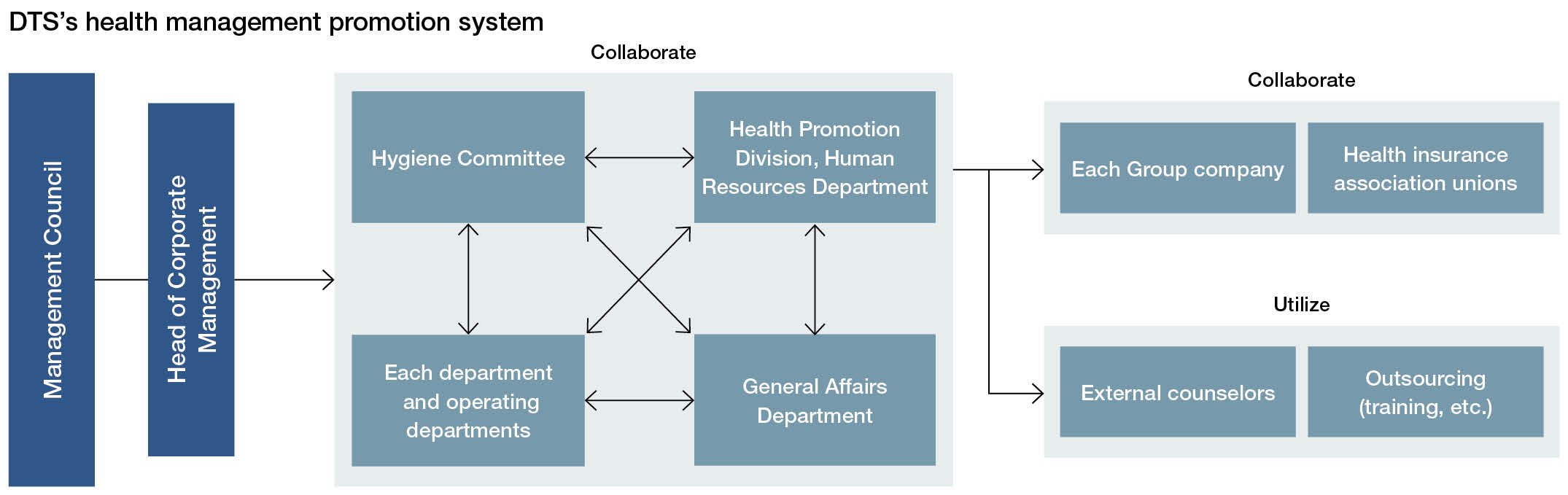
Our occupational health and safety initiatives are implemented in conjunction with our existing Health Management promotion system. Our Health Committee discusses safety issues arising from the workplace environment and operations, and considers and implements necessary measures.
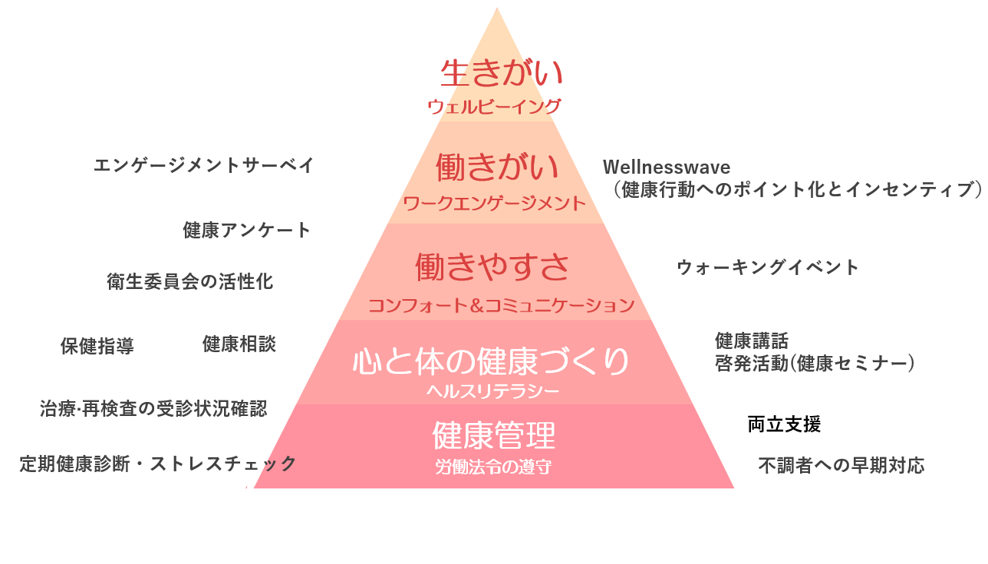
* Measures such as health management by the Health Promotion Office, health consultations by industrial physicians and public health nurses, and stress checks are as described in each step of the "Promoting Health Management" above.
Ensuring workplace safety and risk management
To ensure safety in the workplace, we identify potential risks in the work content and working environment through daily inspections and employee feedback. The identified issues are shared with the Health Committee and other organizations, and improvements are made based on priority.
We are working to improve the safety of the entire workplace environment in conjunction with various Health Management measures, such as limiting long working hours and preventing mental health problems.
Response in the event of a workplace accident
In the unlikely event that a workplace accident occurs, we will promptly confirm the facts and investigate the cause. We will take the necessary measures in accordance with laws and regulations, consider and implement measures to prevent recurrence, and continue to take measures to prevent similar incidents.
The status of response and details of improvements are shared through the Health Committee and other organizations, leading to improved safety standards throughout the organization.
Response to disasters, infectious diseases, etc. (BCP)
We have established a response system based on a business continuity plan (BCP) to prepare for events that could affect business continuity, such as natural disasters and infectious disease outbreaks.
In the event of an emergency, we will prioritize ensuring the safety of our employees and their families, confirm their safety, share information, and make appropriate decisions and take appropriate measures to ensure business continuity.
Indicators for Health Management and occupational health and safety initiatives
In addition to Health Management initiatives aimed at maintaining and improving the physical and mental health of our employees, we are also continually assessing and improving the situation from the perspective of occupational health and safety, including managing working hours and ensuring a safe workplace environment.To confirm the effectiveness of these initiatives and lead to the creation of a more comfortable working environment, we regularly monitor key indicators related to Health Management and occupational health and safety.
We will continue to use these indicators to improve our work environment in terms of both health and safety.
|
FY2022 |
FY2023 |
FY2024 |
| Health indicators |
| Regular health checkup attendance rate (%) |
100.0 |
100.0 |
100.0 |
| Health checkup high-risk rate (%) |
6.3 |
5.6 |
5.6 |
| Health checkup risk rate (%) |
35.7 |
34.7 |
34.5 |
| Observation rate (%) |
44.9 |
43.8 |
44.2 |
| Rate of follow-up measures for those at risk of health problems (%) |
100.0 |
100.0 |
100.0 |
| Smoking rate (%) |
22.5 |
23.1 |
22.8 |
| Rate of people with a healthy weight (%) |
60.0 |
60.1 |
58.1 |
| Exercise habit rate (%) |
22.9 |
23.6 |
24.1 |
| Percentage of employees who feel better after sleeping |
58.0 |
55.7 |
54.8 |
| Stress check indicators |
| Stress check participation rate (%) |
96.3 |
97.5 |
99.0 |
| Percentage of people with high stress (%) |
15.1 |
13.6 |
13.3 |
| Productivity and organizational activity indicators |
| Injury and illness leave rate (%) |
2.7 |
2.9 |
3.2 |
| Presenteeism (University of Tokyo, 1 item version) (%) |
14.0 |
18.9 |
19.6 |
| Absenteeism (number of days absent due to physical or mental illness) (days) |
1.9 |
2.0 |
2.4 |
| Work engagement (feeling proud of your work) (maximum 5) |
2.6 |
2.6 |
2.6 |
| Occupational Safety and Health Indicators |
| Number of work-related accidents (excluding commuting accidents) |
2 |
0 |
3 |
・Health status indicators
The rate of regular health checkups and the rate of those certified as requiring diagnosis remain at 100%. In addition, interviews with industrial physicians and public health nurses are conducted after the health checkups, and the number of high-risk individuals (red/yellow) has remained almost the same. While it is thought that sleep time has decreased due to commuting time as a result of encouraging employees to return to the office rather than working remotely, there have been improvements in the amount of exercise and smoking rates.
・Stress check indicators
We have expanded the scope of our mental health e-learning program, continued to conduct group analysis of stress checks and make workplace improvements, and have seen the greatest reduction in the percentage of people experiencing stress.We have also held webinars to raise awareness of the use of consultation services, and are working to encourage people to seek consultation before they become overwhelmed with stress.
Productivity indicators
The increase in absenteeism and absenteeism may be due to strengthened workplace health management, which has led employees to choose to take time off when ill rather than forcing themselves to come to work. Furthermore, as companies have switched from remote work to encouraging employees to come to the office, employees who previously were able to continue working without coming to work when ill may now be choosing to take time off when ill. In an annual health survey, 60% of employees requested measures to alleviate hay fever and eye strain. As a result, we provided an online medical consultation environment and subsidized consultation fees and the purchase of supplies as part of an "eye strain relief allowance." Participant satisfaction was 98%, and a survey of presenteeism showed an improvement in the percentage of employees with performance scores of 80% or above from 28% to 60% before and after the implementation. To continue analyzing multiple contributing factors and working to curb presenteeism, we will also be investigating women's health awareness, health literacy (CCHL: 3.68), and psychological safety in our health surveys starting in 2024. The survey results showed that 70 to 80 percent of female employees responded that menstrual problems had interfered with their work, and measures will be developed in the future.

 Tomoaki Kitamura